


Yesterday was International Workers Memorial Day, a global day of remembrance for workers who’ve died, been injured, or fallen ill due to workplace hazards. Its motto, “Remember the dead, fight for the living,” calls on governments, unions, employers, and workers to both honor those we’ve lost and demand better protections for those still at work.
And yet, in Australia, the 2025 commemoration barely scratched the surface of what this day should represent.
Instead of a unified moment of national reflection, the day was largely reduced to political speeches and missed opportunities. There were no coordinated moments of silence in workplaces. No deep engagement with the current risks workers face. No meaningful calls to action. We failed those we should have honored.
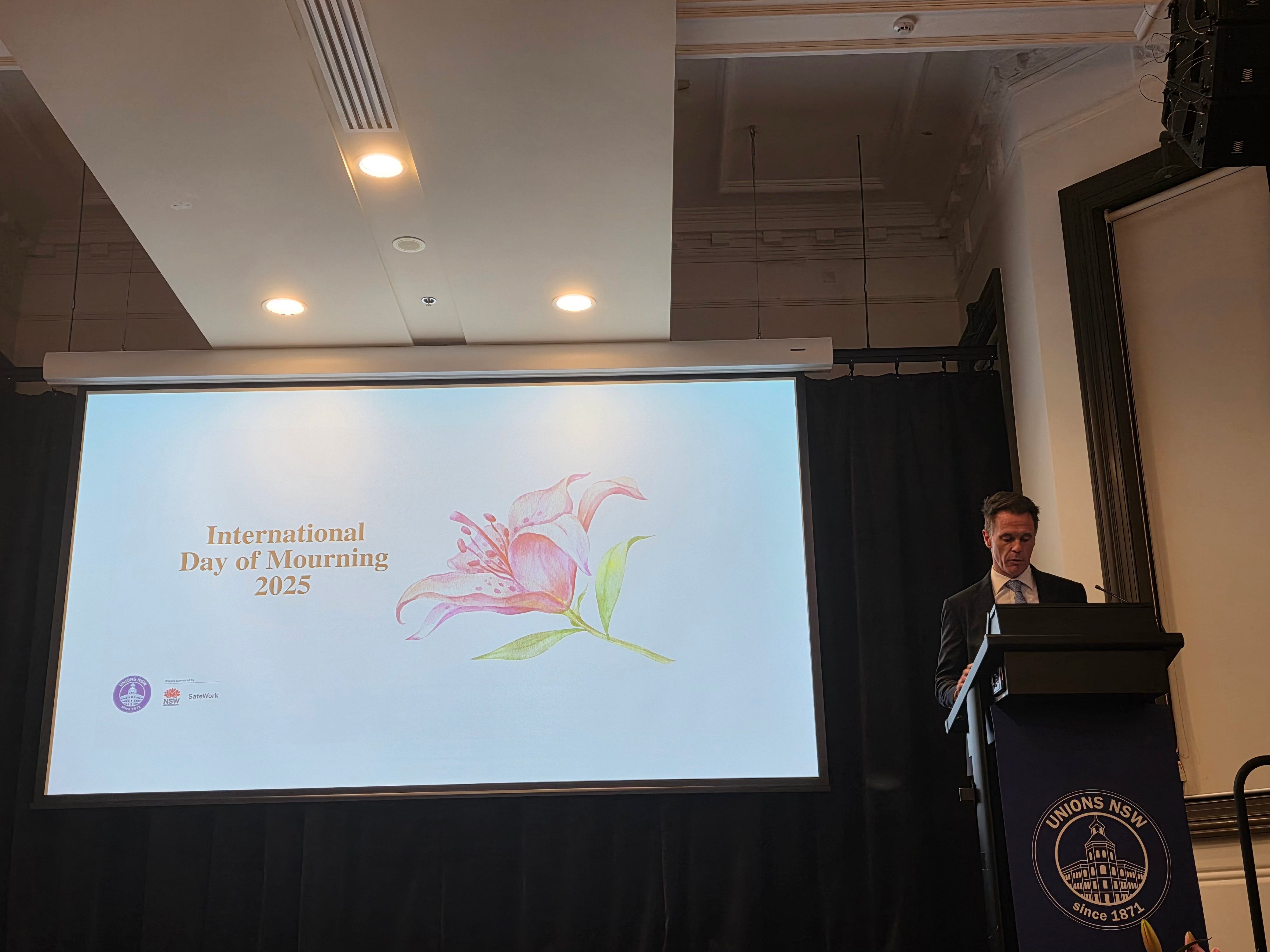
Pictured: Premier of NSW, Chris Minns at the International Day of Mourning Commemoration, Sydney, Australia 2025.
Why April 28 Matters
International Workers Memorial Day originated in the 1970s and was formally recognized in 1989. It began in Canada, rooted in the labor movement’s demand for safer working conditions, and was inspired by the 1914 passage of Ontario’s Workers Compensation Act. Australia adopted the day in the early '90s, with unions and safety advocates championing its cause.
It is a day steeped in both grief and resolve. Yet this year, Australia barely acknowledged it in the very workplaces where lives are most at risk.
The Tragedies That Should Still Haunt Us
Australia’s workplace safety history is filled with devastating events that should serve as wake-up calls:
Mount Kembla, 1902 – 96 lives lost in a mining explosion.
West Gate Bridge Collapse, 1970 – 35 workers killed during construction.
Beaconsfield Mine, 2006 – One miner killed, two rescued after 14 days trapped.
Dreamworld, 2016 – Four lives lost in a theme park accident due to safety failings.
Sydney’s Dust Disease Epidemic – Thousands suffering from long-term exposure to asbestos and silica.
These aren’t just historical footnotes. They are reminders that safety lapses cost lives.
The Growing Crisis: Psychological Injuries at Work
Physical dangers are just one part of the picture. In 2025, psychological injuries are surging, and they’re being largely ignored in public commemorations and policy responses.
Recent reporting from The Sydney Morning Herald revealed the NSW workers’ compensation scheme may collapse within two years, largely due to rising psychological injury claims. These injuries, though making up just 10% of claims, now account for nearly 25% of the system’s costs. They also lead to far longer absences: 143 days on average, compared to 29 for physical injuries.
Why? Because work shouldn't break your mind. But it increasingly does.
Employers continue to neglect their obligations under psychosocial hazard regulations. Toxic environments, bullying, and unmanaged stress are rampant, and regulation is failing to keep up.
My Experience with SafeWork NSW
In my case, SafeWork NSW issued improvement notices to my employer. My employer didn’t even have a bullying policy. They didn’t have a PCBU (Person Conducting a Business or Undertaking). Their "emergency contact" in their policies and procedures document was even a New Zealand number. The workplace was in Australia.
This wasn’t a paperwork error, it was systemic neglect. And while I suffered the psychological harm as a result, the employer faced no meaningful consequences. This is a big part of the problem with psychological claims, not holding employers accountable to an adequate standard to deter harm to their workers. People go to work to earn a living not to be injured and unable to work.
A Reform Backlash Masquerading as Progress
On March 18, 2025, the NSW Government unveiled reforms aimed at curbing psychological injury claims. Treasurer Daniel Mookhey described them as necessary to manage scheme sustainability, but they are a step backward for workers.
The most dangerous proposal? Forcing bullying victims to prove their case in a new IRC jurisdiction before they can even lodge a compensation claim. This is retraumatizing by design. It forces vulnerable workers to face hostile workplaces before accessing treatment or income protection.
Other worrying changes include a redefinition of psychological injury and new interpretations of "reasonable management action"both of which could further restrict support.
This is not reform. It's restriction, repackaged.
The Threats We’re Not Ready For: AI and Automation
International Workers Memorial Day must evolve. We now face new, tech-driven risks:
Algorithmic overwork and surveillance.
Robotic accidents in hybrid human-machine environments.
AI-powered performance reviews with no accountability.
Mental health fallout from job insecurity due to automation and AI inflicted harm - inequity, discrimination and more.
Yet these dangers were entirely absent from most 2025 observances, even though AI was the theme for 2025.
When the System Breaks You Twice
Like many, I never imagined I’d be the one injured at work.
But after experiencing psychological injury, I was thrust into a claims system with an insurer that inflicted more harm than healing. I was gaslit, pressured to return prematurely, and met with silence when I reported legal breaches. My body agency was even stolen from me. I had no rights.
My employer ignored their obligations. Regulators looked the other way. I was left fighting alone, and not even given transparent information to enable me to defend myself through a system designed to wear people down and destroy not return them to work, forcing people to give up.
And many do. That is the true tragedy.
A National Day of Healing – Not Just Hollow Speeches
Standing at the National Workers Memorial in Canberra, while filming Shattered, the documentary, the contrast is stark.
We have etched names in stone. We plant trees. We hold ceremonies.
But the people still alive, still suffering, are forgotten.
This day should be more than symbolic. It should be national, inclusive, and practical. School children, apprentices, and university students should be encouraged to participate. Every workplace should reflect, review safety measures, and reaffirm their commitments to workers' well-being.
Looking Ahead to 2026: Reclaiming the Day
Australia needs a national reckoning, not just for past workplace deaths, but for those still at risk due to psychological harm, automation, and weak regulation.
Let’s elevate April 28 into a National Day of Healing.
Let’s build a culture where we don’t just remember the dead, but fight like hell for the living.
It’s time to reclaim this day as a National Day of Healing.
🔗 If you believe work shouldn’t hurt, share this widely.
💬 Let me know in the comments: how did your workplace (or government) mark the day?


