

In Their Own Words
Part 1: What if the system was struggling to stabilise itself while businesses and their injured were still living inside it?

Behind the political messaging sits a far more confronting possibility: a workers compensation system so consumed by complexity, remediation and institutional survival that its ability to hear and protect businesses and their injured began to break down.
It has taken me a long time to digest what was sitting inside the 21 archive boxes I reviewed in the Parliamentary Reading Room.
I have read the documents.
Then read them again.

To see this level of confusion, fragmentation and institutional chaos written down on paper actually makes me feel sick at times, because I know some of the businesses and their injured whose lives were permanently damaged while all of this was unfolding behind the scenes.
And I am conscious that for people reading this cold, some of what follows may be difficult to absorb.
But the people of NSW have a right to know.
What increasingly emerges from these documents is not simply the story of isolated mistakes or individual failures.
It is the picture of a workers compensation system that may have become so structurally fragmented, operationally burdened and internally consumed by remediation, governance redesign and institutional survival that its ability to coherently protect businesses and their injured began to break down.
I do not pretend to have answers after reading this material.
I honestly do not know where NSW goes from here, how trust is rebuilt, or how businesses and their injured begin making sense of the human consequences that appear to sit underneath years of political messaging and reform announcements.
What I do know is this:
Hiding the scale of what occurred inside this system is not the answer. The system must brief the public. Thoroughly.
A system nobody fully understood
WorkCover was dismantled and replaced with multiple organisations:
icare,
SIRA,
SafeWork,
the Nominal Insurer,
Treasury Managed Fund structures,
multiple legislative frameworks,
multiple reporting lines,
multiple accountability arrangements.
The reform was supposed to improve transparency and accountability.
But years later, in documents I have reviewed, Treasury itself would privately describe the structure as:
“one of the most complex of all NSW Government entities.”
Treasury also acknowledged that the structure created situations where it became:
“unclear who is accountable for the NI.”
That is an extraordinary admission.
Because this was not some minor administrative arrangement quietly operating in the background.
This was the system responsible for supporting businesses and their injured across NSW.
Most people assumed they were dealing with a normal government agency.
Treasury itself later acknowledged they were not.
Under the original structure:
icare executives were accountable to the icare Board,
icare maintained a direct relationship with the Treasurer,
and Treasury itself formally had “no role” under the legislation.
At the same time, the public understandably continued to see the Nominal Insurer as fundamentally part of government.
That disconnect matters because ordinary people were never navigating this system as governance experts.
They were navigating it while injured, financially stressed, psychologically deteriorating or trying to keep businesses afloat.
What many experienced instead was a kind of institutional disorientation in which responsibility appeared to move endlessly between agencies, insurers, regulators and dispute bodies while nobody seemed able to take ownership of the whole picture.
For businesses and their injured, it often felt like being trapped inside a maze.
While the public was being reassured
One of the most confronting aspects of the documents is the scale of the work already underway behind the scenes while the public was still hearing assurances that reform was progressing.
The volume of remediation programs, governance reviews, technology rebuilding, legislative restructuring, operational redesign and risk management activity is enormous.
Treasury and agency documents repeatedly refer to:
governance redesign,
structural repair,
operational risk,
remediation activity,
technology instability,
and underperformance.
One Treasury brief acknowledged:
“Proactive remediation of all 50,000 potentially affected claims would take an unacceptable length of time.”
Another stated:
“A team of forty staff working full time would take around five years to review all claims.”
Another described parts of the infrastructure as:
“legacy custom-built systems which are at or beyond end of supported life, hosted on ageing and fragile infrastructure.”
Read together, the documents suggest something far larger than isolated mistakes.
They suggest a system that may have become so structurally complicated and operationally burdened that it was struggling to stabilise itself while still being expected to safely manage hundreds of thousands of businesses and their injured moving through it.
That does not erase the harm.
If anything, it makes the situation more serious.
Because if the structure itself became too complex to govern coherently, then the people inside it were carrying the consequences of that instability in real time.
The language that stays with you
Some of the most confronting material I have reviewed during all of this is not emotional at all.
It is administrative
Contained inside meeting notes and internal records are phrases that are difficult to forget once read.
References to:
“Park 4,000 long-tail injured workers.”
A statement that it was:
“Not possible to extend EML budget in order to ‘save them all.”
These are not the words businesses and their injured believed sat behind a recovery system.
They are the language of systems under pressure.
Systems trying to manage exposure, cost and operational survival.
The icare Foundation questions
Which also brings me to another deeply uncomfortable part of this story: the emergence of the icare Foundation itself.
The icare Foundation has since ceased operating.
Once you begin understanding that icare originally operated with no clearly defined statutory organisational purpose while simultaneously sitting inside a highly unusual governance structure, the Foundation starts to raise a very different set of questions.
Because while businesses and their injured were moving through an increasingly unstable compensation system, parallel structures also appear to have emerged around “innovation”, wellbeing, social impact and alternative recovery approaches.
At first glance, some of those ideas may have sounded compassionate.
But the documents suggest there were also serious concerns underneath.
In October 2020, SIRA formally wrote to icare advising it was investigating complaints regarding rehabilitation services allegedly being declined because similar services were instead being provided through programs funded by the icare Foundation.
The letter goes further.
SIRA expressly raised concerns that programs funded through the icare Foundation:
“may result in outcomes inconsistent with the intent of the workers compensation legislation”
and that rehabilitation services may have been provided by:
“non-approved practitioners.”
Most significantly, SIRA stated it wanted to ensure workers were:
“not exposed to novel treatment funded by icare Foundation.”
That is extraordinarily serious language for a regulator to use.
Because rehabilitation provider frameworks exist for a reason. They are safeguards designed to protect businesses and their injured inside a regulated compensation environment.
The documents also raise broader questions about how innovation, wellbeing and research activities connected to the icare Foundation were governed, evaluated and supervised within the wider compensation system.
Because once programs begin operating alongside or outside established rehabilitation pathways, questions naturally arise regarding:
clinical oversight,
evidence standards,
informed participation,
regulatory approval,
outcome measurement,
and accountability if interventions do not operate as intended.
These are not abstract governance questions.
They sit directly at the intersection of public trust, health interventions and the obligations owed to businesses and their injured inside a compulsory statutory compensation scheme.
And yet for most people moving through the system during this period, it is unlikely they would have fully understood where the boundaries sat between regulated rehabilitation, innovation programs, peer support initiatives and broader wellbeing activities funded or supported through adjacent structures.
That uncertainty matters.
Because if the institutions themselves were still trying to work through governance, provider arrangements and regulatory boundaries behind the scenes, then many businesses and their injured may have been moving through systems they themselves could not possibly have properly understood.
And once people become disoriented inside systems responsible for health, recovery and livelihoods, trust can deteriorate very quickly.
One of the organisations caught inside that confusion was Craig’s Table, a community-based peer support and wellbeing organisation founded by Rosemary McKenzie Ferguson.
Rosemary was not a corporate operator or institutional insider.
She was a long-standing grassroots figure within the injured worker community who had spent decades supporting injured people and their families, often long before “peer support” became fashionable language inside policy systems.
She was also active in the establishment of the National Injured Workers Memorial in Canberra and the Deceased Workers Memorial Forest in Adelaide, South Australia — a dedicated public memorial space honouring workers who have lost their lives or suffered injury, illness or suicide connected to work.
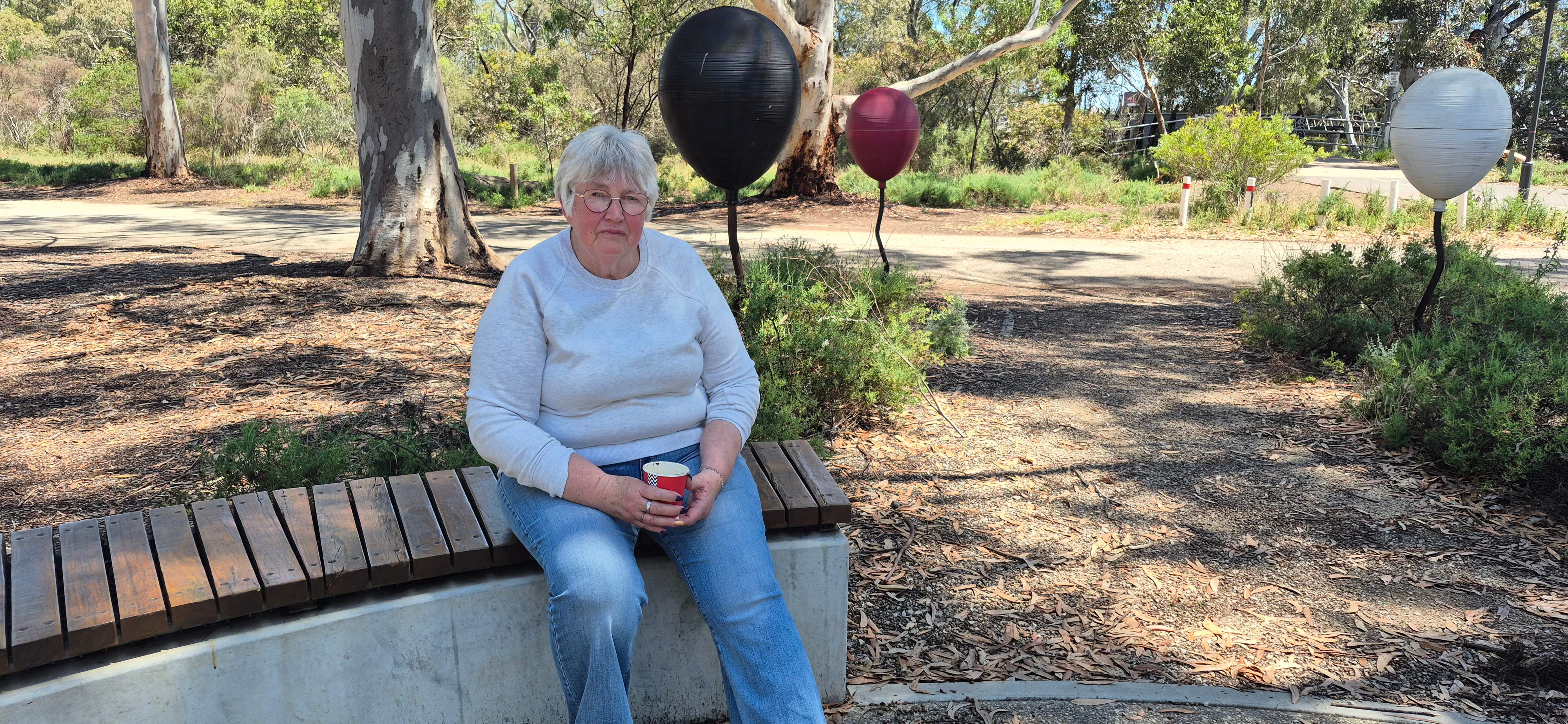
Yet from the period surrounding the 2020 Four Corners program through to today, her reputation appears to have been repeatedly damaged by implication, innuendo and association arising from Craig’s Table’s involvement with the icare Foundation. There is no indication in the documents I have reviewed that Rosemary was informed SIRA was investigating aspects of the icare Foundation at the time. Why do I raise that - because it may of helped Rosemary manage the fallout that was directed to her personally across social media if she had been told.
The reputational consequences appear to have been substantial.
What now makes this deeply troubling when viewed against the broader documents is that Rosemary herself had reportedly already been raising concerns directly with icare, including concerns relating to the absence of a provider number and uncertainty about how the organisation was expected to operate within the system.
I have seen documents suggesting those concerns were never properly answered.
Instead, what appears to have unfolded was a prolonged period in which SIRA and icare themselves were attempting to work through unresolved governance and regulatory concerns while organisations and individuals operating inside that uncertainty were left exposed publicly.
That changes the picture considerably.
Because if community organisations were effectively operating inside a blurred and poorly defined space created by the system itself, then the reputational consequences become profoundly unfair.
And this is where the issue becomes much larger than one organisation or one individual.
Questions about whether businesses and their injured were exposed to poorly governed, ambiguously regulated or insufficiently supervised treatment pathways cannot simply disappear quietly into institutional memory.
Particularly when the regulator itself was formally raising concerns about:
“novel treatment”,
non-approved practitioners,
and outcomes potentially inconsistent with workers compensation legislation.
Those are not minor concerns.
They go directly to public trust, patient safety, informed oversight and the integrity of the entire compensation system.
Because once systems begin operating in blurred spaces where nobody appears fully clear about the boundaries, responsibilities or protections involved, vulnerable people can end up carrying risks they never properly understood themselves.
And perhaps one of the hardest parts of all this to sit with is the possibility that while public attention and criticism became focused on individuals like Rosemary, the much larger structural confusion sitting underneath these arrangements may never have been properly explained to the public at all.
The rebuilding that nobody explained
I have to say honestly, after spending weeks reading these documents, I personally found the scale of the work underway inside the system difficult to absorb.
What has largely occurred instead is piecemeal political messaging while enormous structural rebuilding appears to have been occurring behind the scenes.
For years, businesses and their injured have been publicly calling out the system while, behind closed doors, agencies themselves appear to have already understood that large parts of the structure required major repair.
Not simply adjustment.
Repair.
The documents increasingly suggest the system had become so layered, fragmented and operationally difficult that coherent oversight and management were becoming extraordinarily difficult.
And while that rebuilding was occurring, people were still inside the machinery trying to recover, trying to work, trying to run businesses and trying to make sense of decisions that often felt impossible to navigate.
In other words, the system was not simply processing claims while all of this unfolded.
It appears it was simultaneously trying to rebuild itself while people were still living inside it.
The question NSW must now confront
At this point, what appears necessary is not simply another reform package quietly progressing through government.
It is a massive public education process.
One that explains, in plain English:
what this system became,
why it became so difficult to govern,
what is now being rebuilt,
what risks still exist,
and what lessons must finally be learned from the human cost already paid by businesses and their injured across NSW.
Because prolonged institutional disorientation destroys trust.
And once trust collapses inside systems responsible for injury, recovery and livelihoods, the consequences spread far beyond individual claims.
The people of NSW deserve a fuller and more honest explanation of what occurred inside this system.
Because once you sit with these documents long enough, it becomes difficult not to feel the weight of what appears to have unfolded inside this system over many years.
Not simply frustration.
Not simply anger.
Something much heavier than that.
Too many businesses and their injured seem to have walked into this system believing it would protect them, only to emerge financially, psychologically and professionally damaged while the institutions themselves were still trying to stabilise and rebuild the machinery around them.
I do not think NSW has fully absorbed what that means yet.
Read Part 2 - For Paid Subscribers Only
