

I Am Troubled
The chronology does not describe a system recovering from one difficult period. It describes years of escalating strain while thousands of lives continued moving through it.

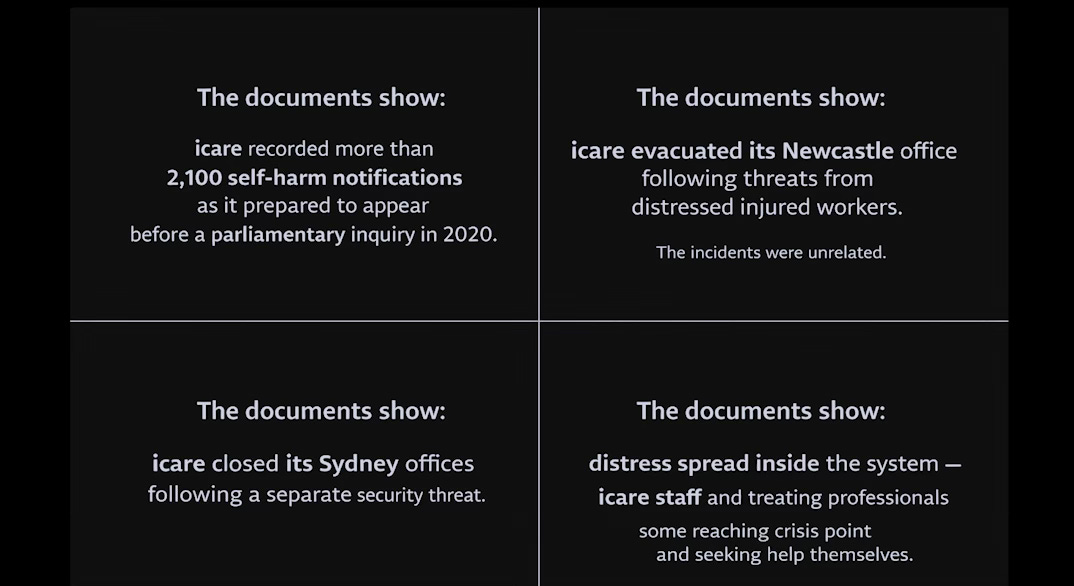
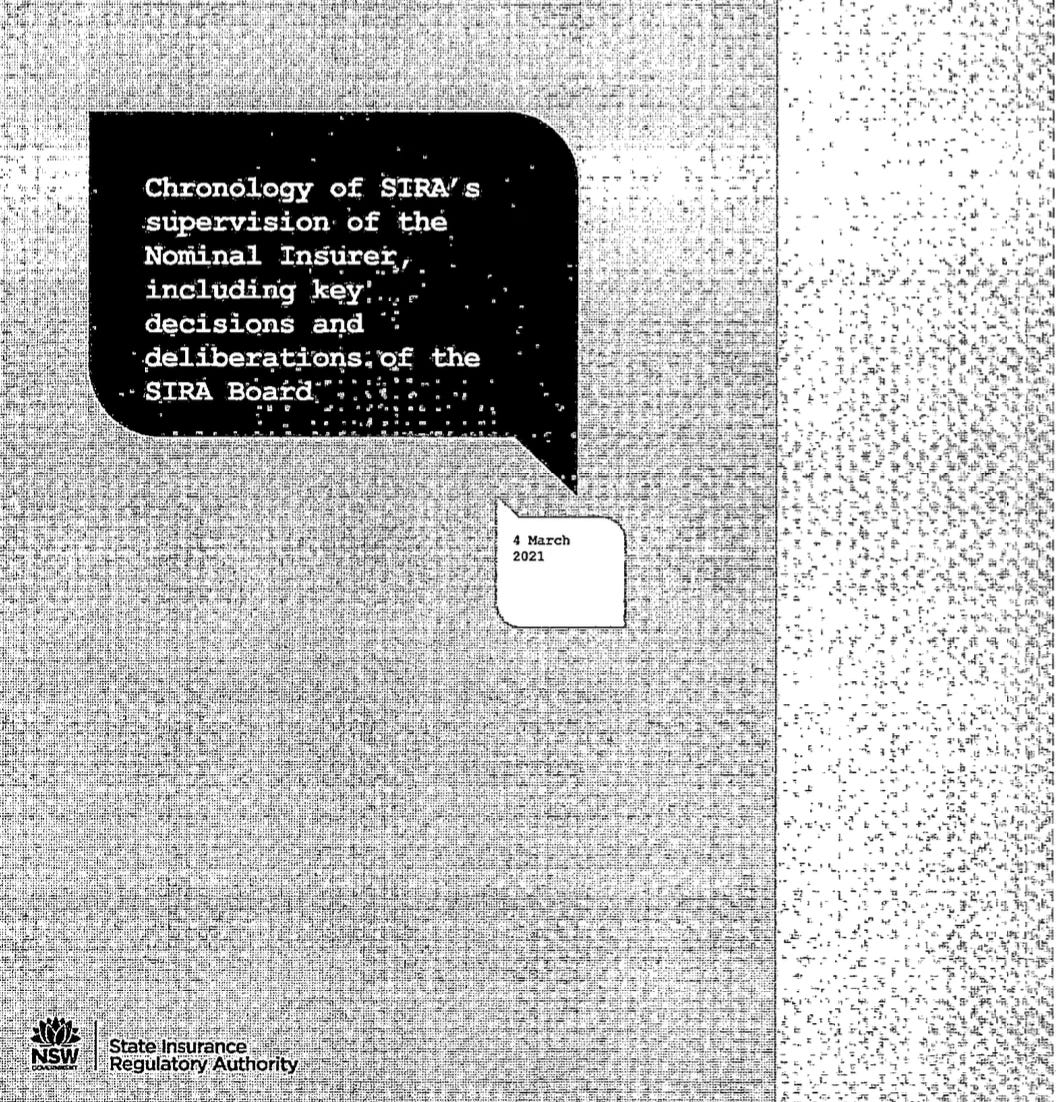
Over recent weeks I have spent considerable time re-reading a chronology prepared by the workers’ compensation regulator itself, documenting what was known, discussed, escalated and investigated inside the workers’ compensation system over a number of years. The State Insurance Regulatory Authority (SIRA) material was obtained legitimately through parliamentary records and the NSW State Archives process. It is not commentary or advocacy material. It is the regulator’s own internal record and, having now sat with it for some time, I find myself increasingly troubled by what it reveals when the entries are read together rather than as isolated events.
Lives At Risk
It has taken me months to even begin speaking publicly about this material because, quite honestly, I find parts of it deeply confronting. Read as a whole, the chronology points toward the impact we now know the system has had on thousands of lives — injured workers whose recoveries stalled, families pulled into prolonged uncertainty, employers navigating escalating pressures, and communities steadily losing confidence in institutions that were created to provide protection and stability.
What emerges is not the picture of a system moving through one tumultuous period before inquiries and reform restored stability. Read in full, the chronology points instead to years of escalating operational pressure, financial deterioration, regulatory intervention and declining outcomes that impacted thousands of lives moving through the scheme. Injured workers, employers and families were not observing these failures from a distance — they were living inside them while the system struggled to respond effectively to conditions it already appeared to understand were deteriorating.
By 2018 there were already discussions occurring at senior levels regarding under-collection of premiums, deteriorating return-to-work outcomes, operational risks and broader sustainability concerns within the scheme. By 2019 icare was seeking $261 million in government support over four years, ultimately receiving $60 million over two years. At the same time, concerns around data quality and visibility into system performance were also being recorded.
As the chronology progresses, the entries become increasingly difficult to dismiss as ordinary administrative problems. There are references to investigations into claims handling, the use of statutory powers, underpayments to injured workers, ongoing non-compliance matters and, perhaps most confronting of all, a formal warning letter reiterating the requirement to notify the regulator of the deaths of section 39 affected workers.

That particular entry stopped me.
Not because systems never encounter tragedy, but because the existence of such a warning raises obvious questions about what processes existed for identifying, recording and responding to serious harm occurring within the scheme. Read in full, the chronology points toward the impact we now know the system has had on thousands of lives — injured workers whose recoveries stalled, employers caught in escalating pressures, families navigating uncertainty, and communities increasingly losing confidence in institutions that were designed to provide protection and stability.
Endless Reforms & Public Consultations
What troubles me most is not simply that serious issues existed. Large and complex systems inevitably experience periods of strain. It is that the chronology suggests many of these pressures were already known while consultation, reform processes and public messaging about the future of the scheme continued around them. In large institutions process often continues even while underlying conditions are deteriorating, creating a disconnect between how a system is publicly described and how it is actually being experienced by the people moving through it.
That disconnect matters.
It matters to injured workers attempting to recover their health while navigating uncertainty and adversarial processes. It matters to employers funding the scheme through premiums while being assured the system is functioning as intended. And it matters to the broader public, who assume that when serious risks emerge inside systems designed to protect vulnerable people, those risks are not only identified but meaningfully addressed.
When Data Integrity Fails
What has also become increasingly difficult to ignore are the questions surrounding the technology and data systems underpinning the scheme itself.
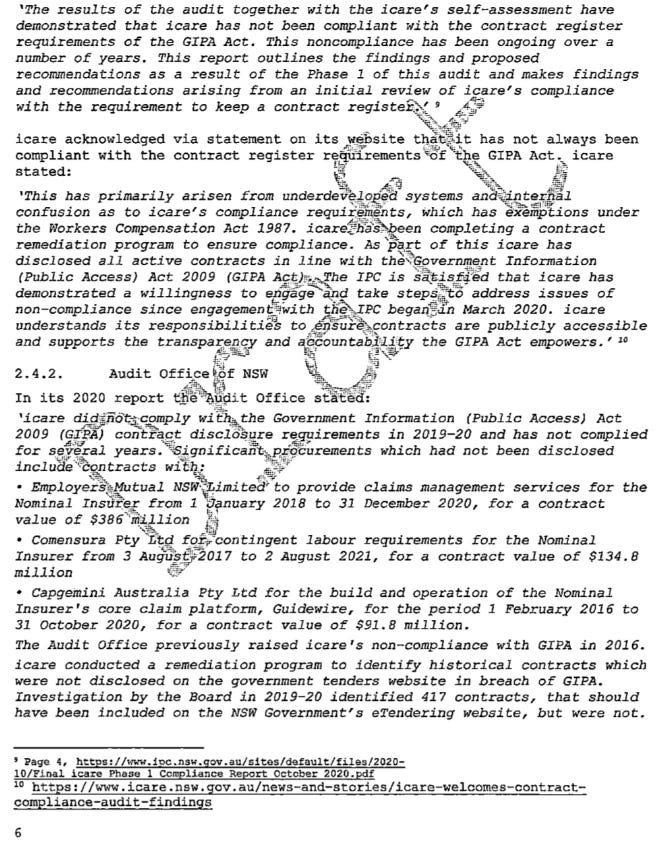
One Audit Office extract records that the original Capgemini contract for the build and operation of the Nominal Insurer’s core claims platform — Guidewire — covering the period from 1 February 2016 to 31 October 2020, with a disclosed contract value of $91.8 million, had not been properly disclosed under GIPA requirements for years.
That matters because throughout the chronology there are repeated references to operational risk, visibility problems, data quality concerns and the regulator’s limited ability at times to accurately assess system performance. Industry sources now claim the cost of Guidewire implementation has expanded dramatically beyond those original figures and continues to grow.
If that is true, then the public deserves clarity.
Employers funding this scheme deserve clarity.
Injured workers whose lives are shaped by decisions flowing from these systems deserve clarity.
What has the implementation actually cost to date? What is the current state of the data environment underpinning the scheme? How much confidence do government, parliament and the regulator themselves have in the integrity and visibility of the system they are now asking the public to trust through another round of consultation and reform?
These are not abstract technology questions. They go directly to claims management, oversight, premium setting, return-to-work outcomes and the ability to identify harm when things go wrong.
It is now 2026 and NSW is once again in a period of public consultation and reform regarding the workers’ compensation system. SIRA and the State Insurance and Care Governance structures are currently progressing new regulations, guidelines and market instruments flowing from the Workers Compensation Legislation Amendment Act 2025 and the Workers Compensation Legislation Amendment (Reform and Modernisation) Act 2026.
Yet having now read the chronology carefully and repeatedly over time, it is difficult to avoid a more fundamental question:
Were the underlying conditions reflected throughout these documents ever fully confronted and resolved, or has reform continued to move forward while deeper structural problems remained insufficiently addressed?
Because meaningful reform cannot occur in the absence of clarity about the true condition of the system it is attempting to change.
The public deserves that clarity.
Employers deserve that clarity.
Injured workers deserve that clarity.
The Public Deserves An Explanation
Given the current Treasurer, Daniel Mookhey, called for these papers through parliamentary process whilst in opposition, I believe the NSW Government now has a responsibility to openly explain what this chronology shows, what has actually changed since these events occurred, and what confidence the public should have that the underlying issues identified across these years have genuinely been resolved.
That responsibility matters because the chronology does not read as a record of isolated administrative problems that were quickly identified and corrected. Given what has been amplified in recent inquiries it raises serious questions.
Read in full, it points to years of continued operational strain, deteriorating outcomes, regulatory intervention with little result and growing pressure occurring while injured workers, employers and families continued moving through the system.
At some point governments must do more than announce endless reform. They must also account honestly for the condition of the system they are reforming.